Why Meta Ads Are the #1 Growth Channel for E-Commerce Brands in 2026
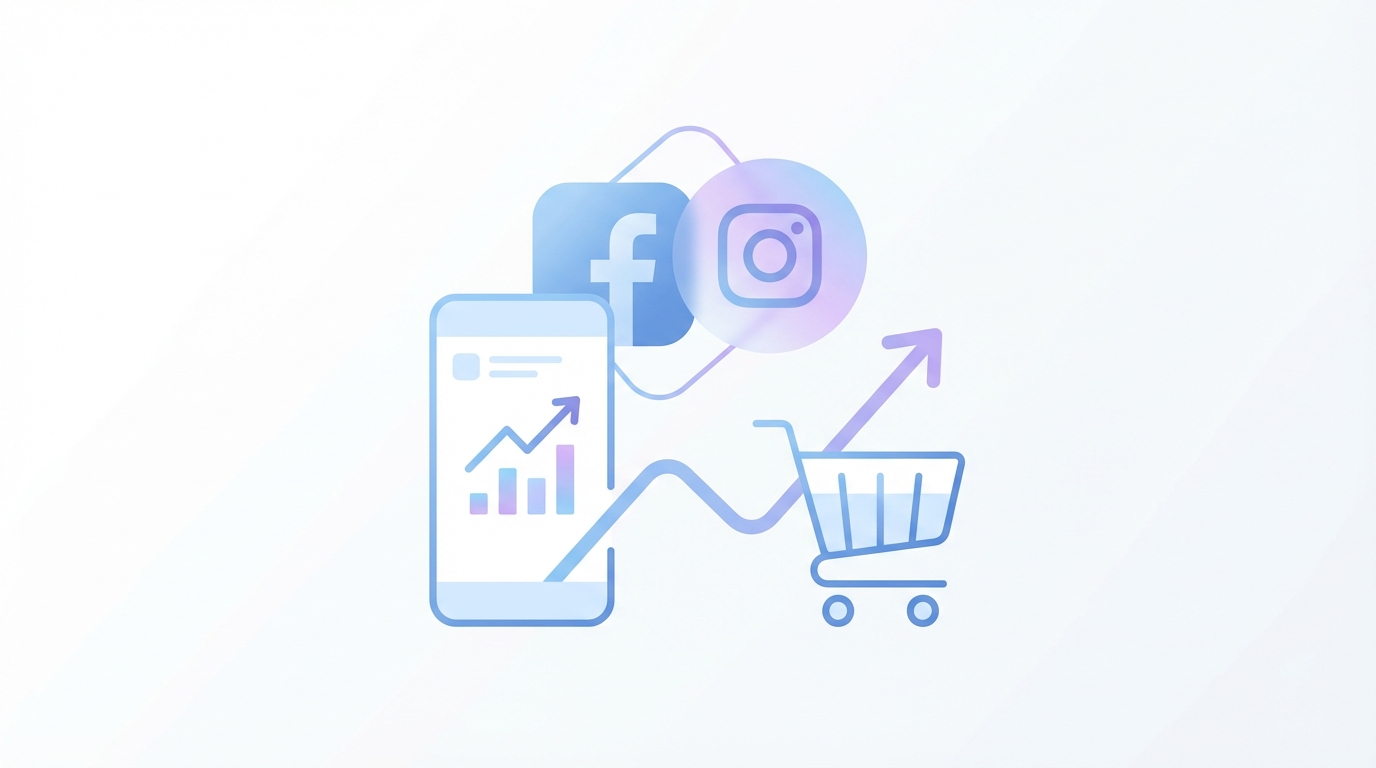
If you are running an e-commerce business and you are not leveraging Meta Ads — Facebook and Instagram advertising — you are leaving serious revenue on the table. With over 3.2 billion daily active users across the Meta ecosystem and the platform's unmatched ability to target buyers by interest, behaviour, and purchase intent, Meta remains the single most powerful paid social channel for e-commerce brands of every size.
But running Meta Ads profitably in 2026 is a very different game from what it was two years ago. The algorithm has matured, iOS privacy changes have reshaped audience targeting, and AI-powered campaign types like Advantage+ Shopping Campaigns (ASC) have fundamentally changed how top advertisers structure their accounts. This guide covers everything you need to know — from account structure and audience strategy to creative frameworks and scaling techniques — to help you run Meta Ads that actually generate a strong return on ad spend (ROAS).
Understanding the Meta Ads Ecosystem in 2026
Before you spend a single rupee or dollar, you need to understand the landscape. Meta's advertising platform encompasses Facebook Feed, Instagram Feed, Instagram Reels, Instagram Stories, Facebook Marketplace, Audience Network, and Messenger Ads. For most e-commerce brands, Instagram Reels and Facebook Feed drive the highest volume, while Instagram Stories and Reels are the best formats for top-of-funnel awareness and impulse-driven purchases.
The core campaign types you will use are Awareness, Traffic, Engagement, Leads, App Promotion, and Sales. For e-commerce, the Sales objective with a Purchase conversion event is almost always your primary goal. The algorithm will optimize delivery to show your ads to people most likely to buy — but only if your Meta Pixel or Conversions API is correctly installed and passing clean data.
Setting Up Your Meta Pixel and Conversions API (CAPI) the Right Way
Your Meta Pixel is the foundation of everything. Without clean conversion data, the algorithm cannot learn who your buyers are, CPMs rise, and your ROAS collapses. In 2026, the gold standard is a server-side Conversions API (CAPI) setup that sends purchase, add-to-cart, and initiate checkout events directly from your server to Meta — bypassing browser-level ad blockers and iOS 17 tracking restrictions.
Here is the non-negotiable setup checklist:
- Install Meta Pixel via your Shopify, WooCommerce, or custom integration. Verify all standard events are firing correctly using Meta's Test Events tool.
- Enable Conversions API (CAPI). Use a native integration through your e-commerce platform or a third-party like Elevar or Stape for maximum data reliability.
- Enable Automatic Advanced Matching. This hashes and matches customer emails, phone numbers, and addresses to Meta profiles, significantly improving your match rate.
- Set up the Meta Pixel Helper Chrome extension to audit your setup and catch duplicate events or misfires.
A healthy event match quality score of 7 or above (out of 10) in your Events Manager is the benchmark to aim for. Anything below 6 means you are feeding the algorithm bad data and paying the price in higher CPCs and lower conversion rates.
Campaign Structure: The Meta Ads Funnel That Actually Scales
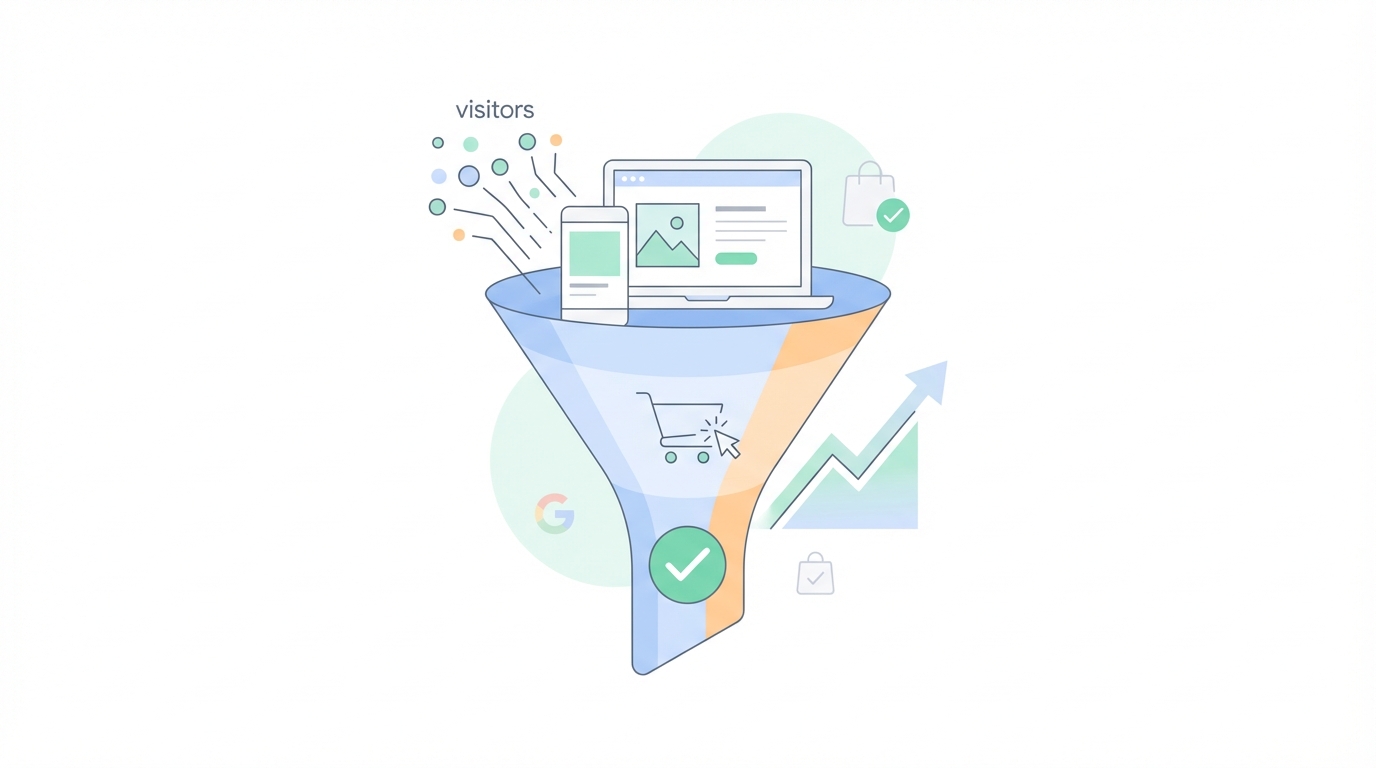
The biggest mistake most e-commerce brands make is running a single campaign and hoping for the best. Profitable Meta Ads require a structured three-stage funnel: Top of Funnel (TOF), Middle of Funnel (MOF), and Bottom of Funnel (BOF).
Top of Funnel (TOF): Cold Audience Prospecting
Your TOF campaigns target people who have never heard of your brand. The goal is to reach a high volume of relevant users at the lowest possible cost per click (CPC) and generate your first touchpoint. In 2026, the most effective TOF strategy for most brands is Advantage+ Shopping Campaigns (ASC), Meta's AI-powered campaign type that automates audience finding, placement selection, and budget allocation. ASC has consistently outperformed manual prospecting campaigns for established e-commerce accounts with sufficient purchase history data.
For brands newer to Meta Ads or those in a niche where ASC underperforms, Interest-based and Lookalike Audience targeting in a manual Sales campaign remains a powerful alternative. Build lookalikes from your top 1,000 purchasers or 180-day website visitors for the strongest signal.
Middle of Funnel (MOF): Retargeting Engagers
MOF campaigns target people who have watched your video ads, engaged with your Instagram or Facebook page, or clicked a link but did not visit your website. These audiences are warm but not yet intent-driven. Use carousel ads, short-form video testimonials, or user-generated content (UGC) to build social proof and bring these users one step closer to purchase consideration.
Bottom of Funnel (BOF): Website Retargeting and Cart Abandonment
BOF is where you recover lost revenue. Target website visitors from the past 14–30 days, add-to-cart abandoners, and initiate checkout abandoners with highly specific creatives. Dynamic Product Ads (DPAs) are essential here — they automatically show each user the exact product they viewed on your website, dramatically increasing click-through rates and return ROAS.
A typical BOF budget allocation ranges from 15–25% of total Meta ad spend, yet it often drives 35–50% of total attributed revenue. It is the highest-leverage part of your funnel and should never be neglected.
Creative Strategy: What Actually Works on Meta in 2026
In the age of Reels and short-form content, creative is your single biggest performance lever. You can have perfect targeting and structure, but if your ad does not stop the scroll in the first 1–2 seconds, you will burn through budget with nothing to show for it. Here is what top-performing Meta Ad creatives look like in 2026:
- User-Generated Content (UGC) outperforms polished brand video by 2–4x. Authentic testimonials filmed on a smartphone with natural lighting consistently generate lower CPMs and higher conversion rates than studio-produced content.
- The hook is everything. Your first frame and first line of audio must address a pain point, create curiosity, or present a bold claim. Examples: "I wasted ₹2 lakhs on ads before learning this..." or "This is why your Meta ads aren't converting."
- Static image ads are not dead. High-contrast product images with a bold value proposition overlay (e.g., "Free shipping over ₹999 | 10,000 reviews") continue to drive strong ROAS, especially for BOF retargeting.
- Test 3–5 creatives per ad set at launch. Let the algorithm spend for 3–5 days before identifying winners. Turn off underperformers and iterate on your winners rather than constantly creating from scratch.
Budgeting, Bidding, and Scaling: The 3-Phase Approach
Scaling Meta Ads profitably requires a disciplined framework. Rushing to increase budgets before your campaigns have optimized is one of the most common — and costly — mistakes we see e-commerce brands make.
Phase 1 — Learning Phase (Days 1–7): Launch campaigns with a budget sufficient to generate at least 50 purchase events per week per ad set. Do not make major changes during this phase. Let the algorithm learn. A good starting point is ₹2,000–₹5,000/day depending on your AOV and target CPA.
Phase 2 — Stabilise Phase (Days 7–21): Once your campaign has exited the learning phase and hit a stable CPA and ROAS, make incremental budget increases of 15–20% every 2–3 days. Larger jumps can trigger a new learning phase.
Phase 3 — Scale Phase (Day 21+): Once you have a profitable baseline, scale aggressively through two levers: increasing the budget on your best-performing ad sets, and duplicating those ad sets with new creative variations to prevent ad fatigue.
Key Metrics to Track for E-Commerce Meta Ads
Vanity metrics like impressions and clicks are distractions. Focus on these performance indicators:
- ROAS (Return on Ad Spend): Total revenue divided by total ad spend. A healthy ROAS benchmark varies by niche and margin, but most e-commerce brands target a minimum of 3–4x.
- CPA (Cost Per Acquisition/Purchase): Your average cost to acquire one customer. This must be less than your gross margin to be profitable.
- CTR (Click-Through Rate): Measures creative relevance. A CTR above 1.5% is generally healthy for TOF prospecting.
- CPM (Cost Per 1,000 Impressions): A rising CPM indicates audience saturation or increased auction competition. Refresh creatives regularly.
- Frequency: The average number of times a person has seen your ad. Above 3 for BOF is normal; above 5 for TOF indicates creative fatigue.
Common Meta Ads Mistakes That Destroy ROAS
Even experienced advertisers fall into these traps:
- Changing campaigns too frequently: Every significant change resets the learning phase. Patience is a superpower in Meta Ads.
- Targeting audiences that are too narrow: Meta's algorithm needs scale to find buyers. Audiences under 1 million restrict delivery and raise CPMs.
- Ignoring mobile-first creative specs: Over 90% of Meta ad impressions are on mobile. Design all creatives for vertical (9:16) and square (1:1) formats first.
- Not using Advantage+ Placements: Manual placement exclusions often hurt performance. Unless you have a specific reason to exclude a placement, let Meta's AI decide where your ads show.
- Sending traffic to a weak landing page: Your landing page is where sales are won or lost. A slow, unclear, or untrustworthy product page will kill your ROAS regardless of how good your ads are.
Final Thoughts: Meta Ads Mastery Is a Compounding Advantage
The brands that win with Meta Ads in 2026 are not those with the biggest budgets — they are the ones with the best creative testing systems, the cleanest data infrastructure, and the most disciplined approach to scaling. Start with a solid funnel structure, invest in authentic creative, keep your Pixel and CAPI clean, and optimize relentlessly based on purchase data rather than vanity metrics.
If you want a team of certified Meta Ads specialists to audit your current campaigns and build a data-driven scaling strategy for your e-commerce brand, book a free audit with Ads Kong today. We have helped brands across India and globally achieve 3–10x ROAS on Meta — and we are obsessed with making your ad budget work harder.